Every job below is one we do ourselves across North Port.
We frame with pressure-treated 2x8 or 2x10 joists on 16 inch centers, set posts on poured concrete footings, and tie everything down with hurricane straps to meet Florida wind load code. Decking goes down last, whether that's pressure-treated pine, composite or PVC board.
Most repair calls start with a soft spot near the ledger board, where years of water running off the house have rotted the rim joist underneath. We cut out the bad wood, sister in new joists where the frame's still sound, and reflash the ledger so it doesn't happen again in the same spot.
Florida sun breaks down bare wood fast, graying it in a year and cracking it in two or three. We pressure wash first to lift mildew and old finish, let the boards dry a full day, then seal with a stain rated for high UV exposure.
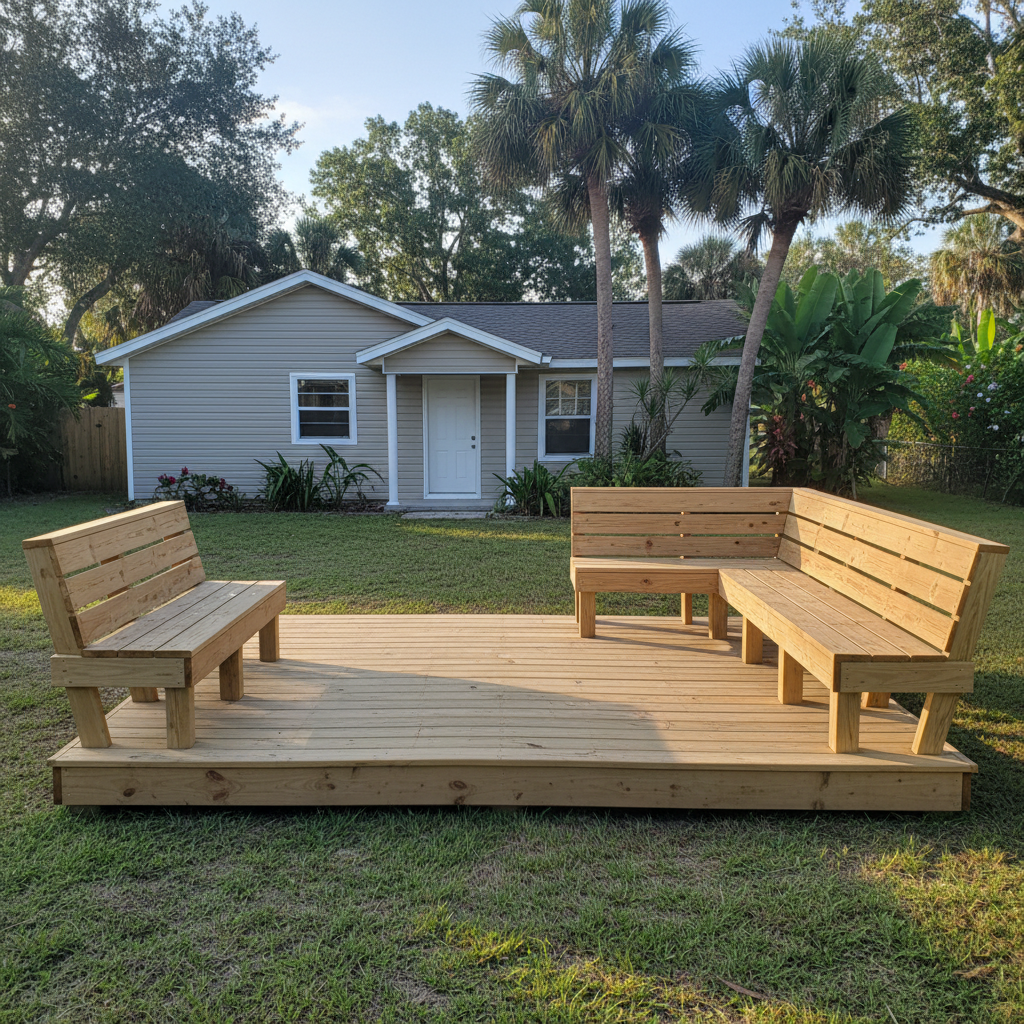
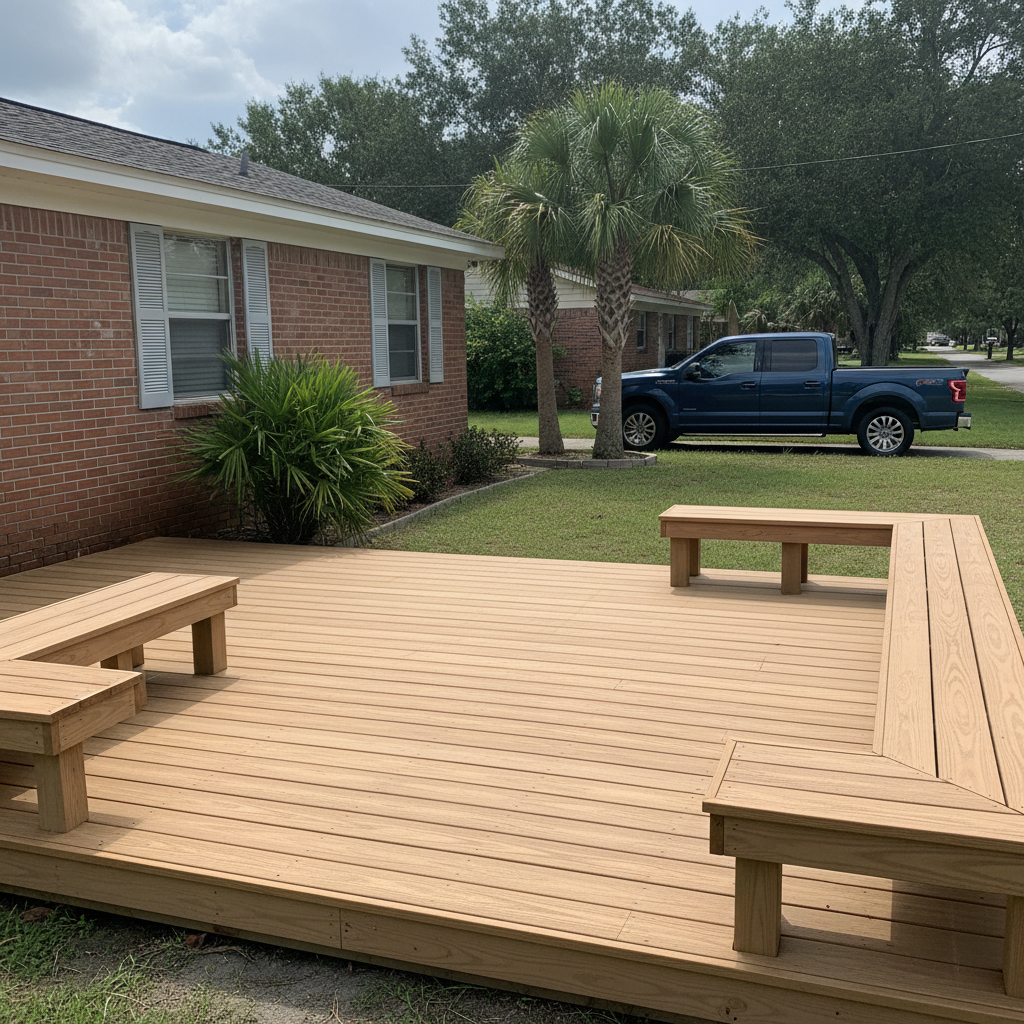
Some decks are a straight rectangle off the back door, and that's fine. Others get a second level for a hot tub, built-in bench seating along one rail, or a layout built around an existing oak tree, and we draw it out before anyone picks up a saw.
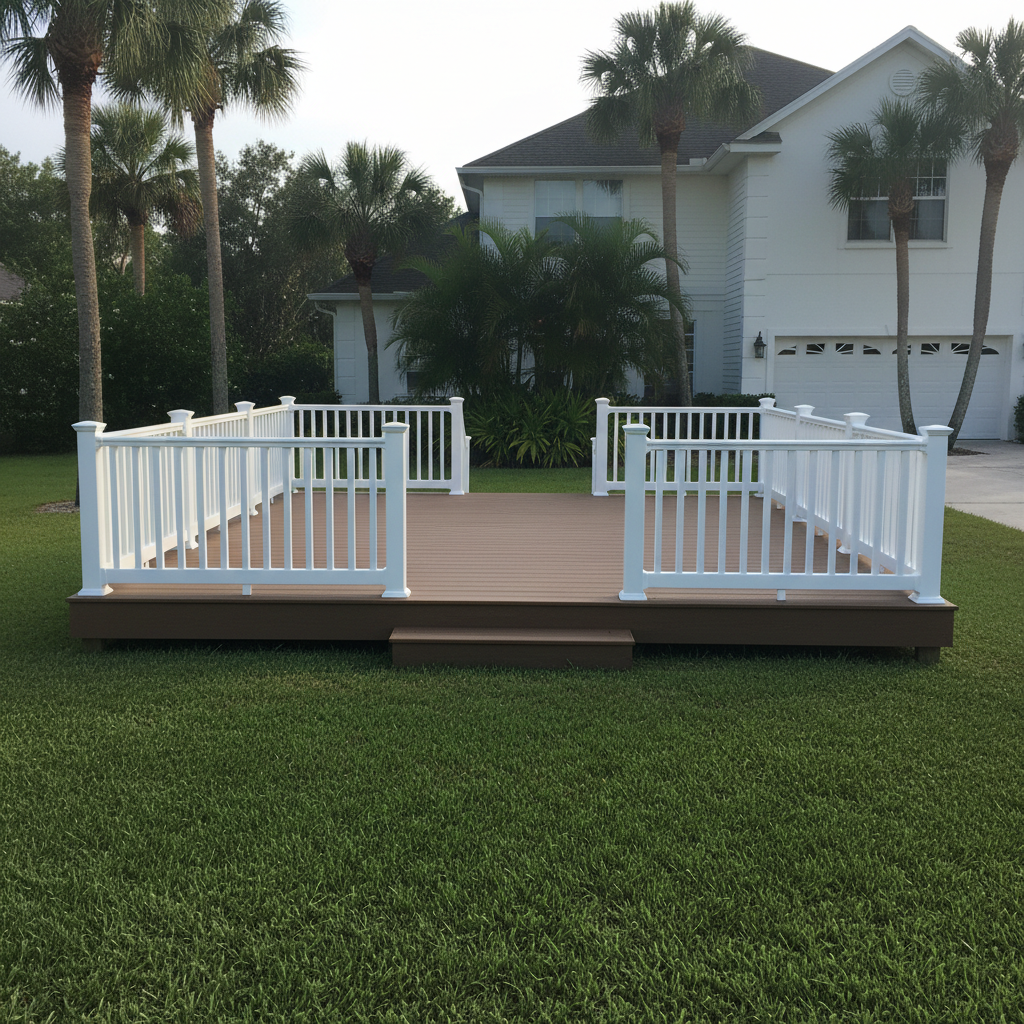
Composite boards like Trex or TimberTech don't splinter, rot or require yearly staining, which matters here where bare wood takes a beating. We install with hidden fastener clips for a clean top surface and leave the manufacturer's expansion gap at every board end so it doesn't buckle in August heat.
If the frame underneath is still solid, you don't need a full rebuild, just new decking on top of the existing joists. We check every joist for rot and soft spots first, because there's no point screwing new boards to a bad frame.
Decking around a pool has to stay slip-resistant wet and hold up to splashed chlorine, so we use fasteners rated for that exposure and board spacing that drains fast. We build to the pool barrier and railing height code the county inspector will check for.
Florida code calls for guardrails on anything over 30 inches off the ground, 36 inches minimum height, with balusters spaced so a 4 inch sphere can't pass through. We install wood, aluminum or cable rail systems, built to hold up to wind, not just look good on install day.
Tearing out an old deck is its own job, especially if the ledger board's rotted into the house framing. We pull it down board by board, haul off every scrap, and check what's left of the house band board before anything new gets attached to it.
A screened enclosure over a deck keeps the no-see-ums out, but the frame underneath has to be engineered for the extra wind load a screen cage adds. We coordinate the deck framing and the screen contractor's footprint so the whole structure passes inspection together, not as two separate jobs.
Four steps, and no surprises in any of them.
You tell us what you want doing, we look at what is actually there, and we ask the awkward questions early.
In writing, itemised, free. If something might add cost later we flag it now rather than at the end.
Same crew throughout. We cover your floors, keep the dust down and tidy up before we leave each day.
You point out anything you are not happy with and we fix it before the invoice, not after.
Same crew, same code requirements, wherever your address falls on this list.
Questions that come up once a project is actually underway.
Describe the problem and we will tell you what it probably is. No obligation.